Project Partners

Politecnico di Milano

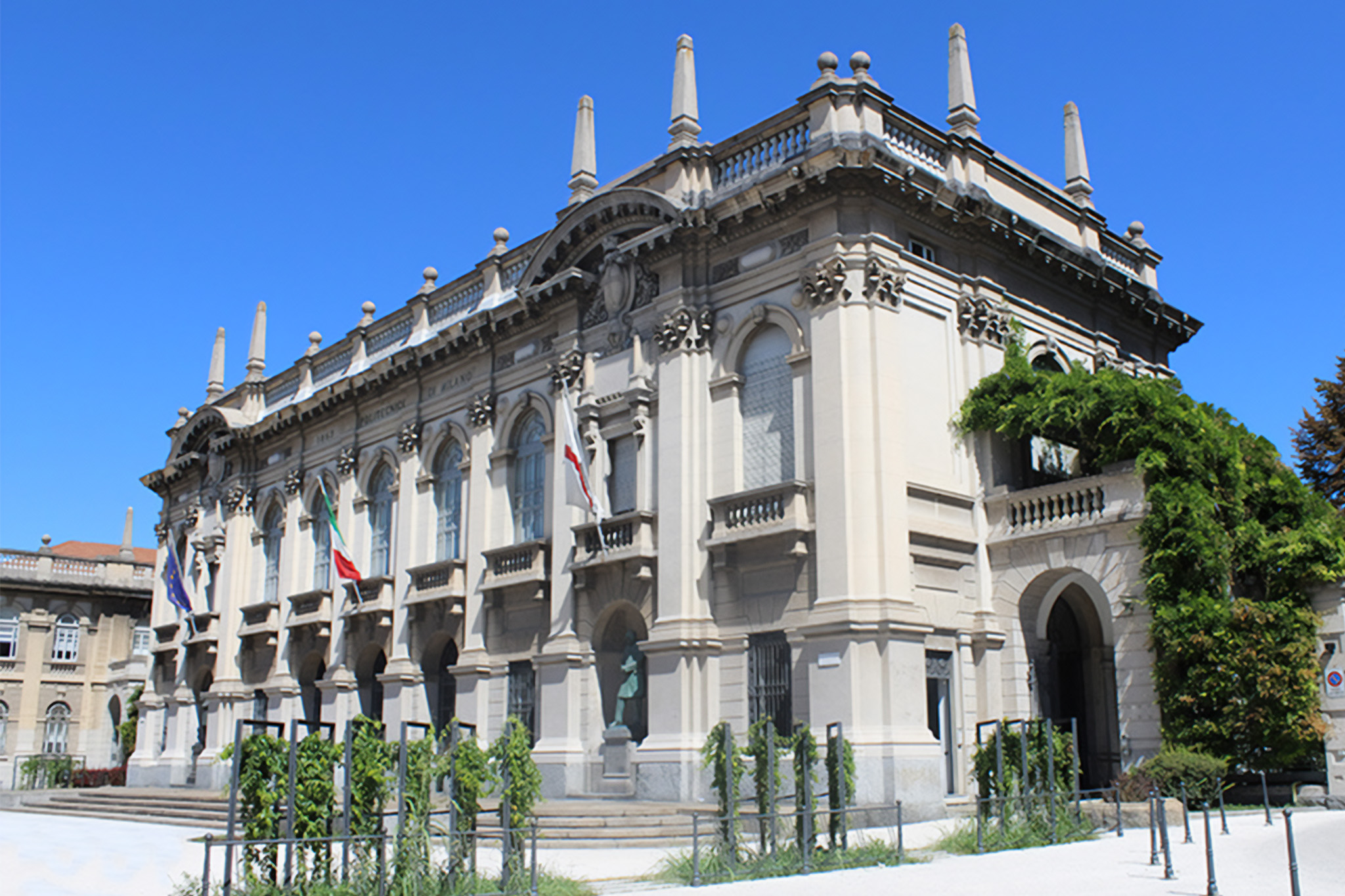
Politecnico di Milano (POLIMI)  is a public scientific and technological university, founded in 1863, that trains engineers, architects, and industrial designers at Bachelor’s, Master’s, and PhD levels. It is internationally recognized for its strong focus on quality and innovation in both teaching and research, combining solid theoretical foundations with first-rate research infrastructures that enable a wide range of experimental activities. Research is a core mission of the university and is closely integrated with education, fostering high-level international results and continuous interaction between academia and society. Through long-standing cooperation and strategic alliances with the economic, industrial, and manufacturing sectors, Politecnico di Milano actively promotes technology transfer and applied research, while positioning itself as a reliable and recognizable point of reference for sustainable development in Italy and across Europe. 

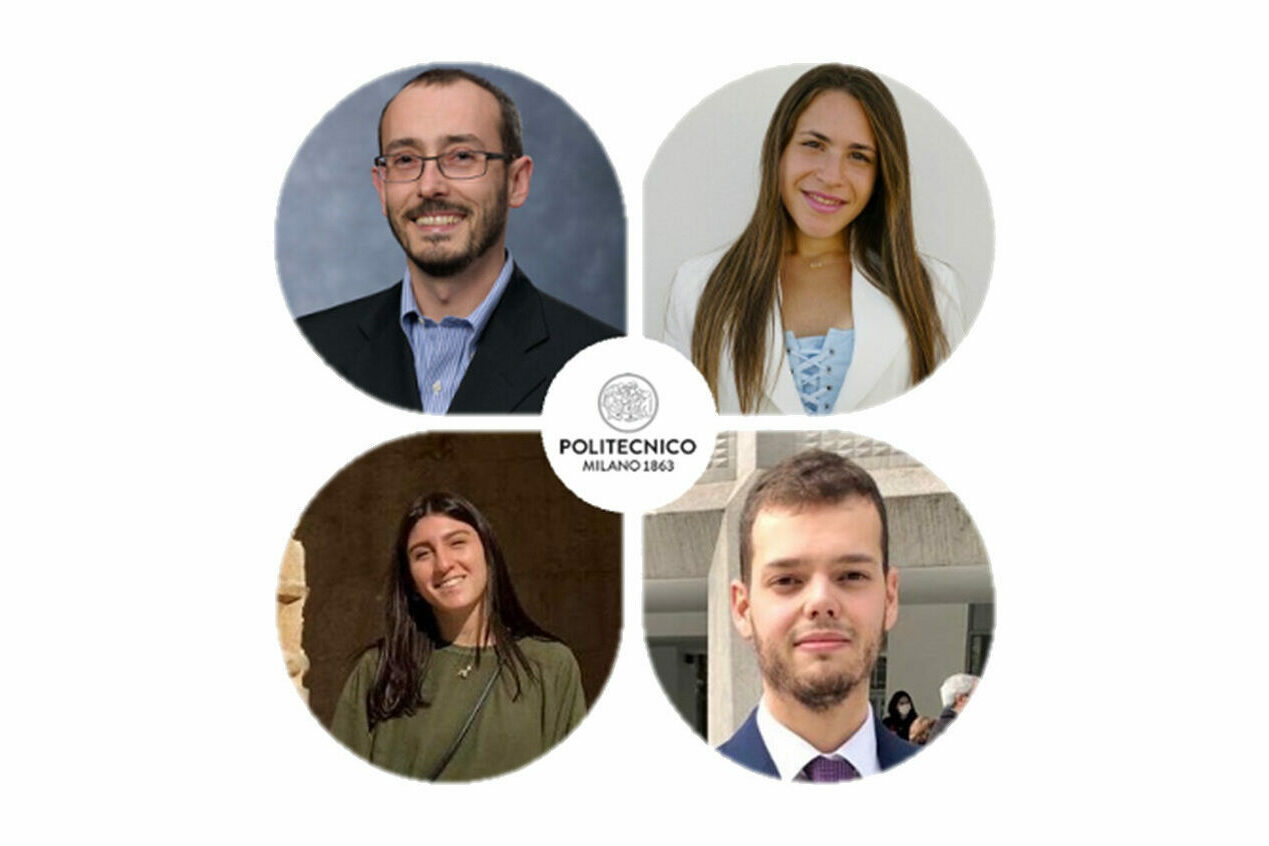
Paolo Zunino is Full Professor of Numeral Analysis and  is a member of the Laboratory of Modeling and Scientific Computing within the Department of Mathematics. His recent research focuses on applied and numerical mathematics for partial differential equations; scientific computing and machine learning; computational biomechanics and oncology, with applications to digital twins and data-driven models for precision medicine. 

He is the WP Leader and part of his team are Francesca Arceci, Piermario Vitullo and Cristina Macaluso, researchers of the Department of Mathematics. 
POLIMI leads Work Package 7 (WP7) – Digital Twins, whose objective is to develop a hierarchy of digital twin models with increasing predictive capability to assess the risk of severe side effects in individual patients following radiotherapy treatment. 

Main tasks are:  

  • to perform a retrospective study based on a historical cohort to develop low-level digital twins that provide a personalized radiation safety score after exposure to ionizing radiation;  
  • to develop a proof-of-concept for sex- specific digital twins; 
  • to develop high-fidelity digital twins for risk assessment leveraging on data collected prospectively (WP9), including a detailed baseline information and “environmental” data in the follow-up history;  
  • and to propose a personalized follow-up schedule guided by the digital twin’s prediction 

To develop task-driven digital twin architectures capable of modeling toxicity risk at scale across heterogeneous patient populations, a Digital Twin (DT) framework based on probabilistic graphical models is adopted. This approach decomposes late toxicity risk into three distinct probabilistic components: exposure (e.g., radiotherapy dose, chemotherapy agents), susceptibility (e.g., age, imaging, biological, genomic, and transcriptomic factors), and severity (e.g., observed clinical outcomes). This decomposition provides a more transparent, flexible, and causally interpretable framework for understanding and quantifying toxicity risk. 

POLIMI is also part of WP4 – Genetics, WP5 – Transcriptomics, WP6 – Software Tool and WP10 – Dissemination and Exploitation.  

Follow Us

@projectetris
📢 Missed ESTRO 2026? Now you can explore TETRIS research directly from our website!

Several TETRIS researchers presented their latest work at the European Society for Radiotherapy and Oncology (ESTRO) Congress in Stockholm, contributing to discussions on personalised and safer radiotherapy.

📥 Presentation materials are now available for download, including:

🔬 Predictors of cardiotoxicities after hypo-fractionated whole breast radiotherapy: dependence on the type of cardiac event - Poster presented by Alfonso Belardo Libera Università Vita-Salute San Raffaele

🔬 CT-based Predictors of Radiation-Induced Pulmonary Toxicity in Breast Cancer Patients - Poster presented by Marco Fois, PhD Libera Università Vita-Salute San Raffaele

🔬 Functional Biomarkers and Prediction Models 2 – Mini oral by Benedetta Dionisi Ferrera, focusing on genetically adjusted radiation dose and the assessment of late fibrosis risk after breast cancer radiotherapy 

🔬 The Power of Local and Nationwide Radiotherapy Quality Registries - Presentation by Eva Onjukka 

Discover how TETRIS is advancing research on radiation-induced side effects, predictive modelling, genetics, quality registries, and personalised risk assessment.

👉 Visit our website to download the presentations https://projectetris.eu/2026/06/tetris-researchers-take-part-in-estro-2026/ and learn more about the research presented at #ESTRO2026. 

#TETRIS #Radiotherapy #CancerResearch #ESTRO2026 #PersonalisedMedicine #PatientCare #researchinnovation @istituto_tumori Fondazione IRCCS Istituto Nazionale dei Tumori @cmon_lab Università Vita-Salute San Raffaele @unisr Karolinska Universitetssjukhuset  @karolinskaunivsjukh

...

6 0
🎓 Thank you for making the first TETRIS Young Researchers Week a success!

This week, young and senior researchers from across the TETRIS consortium came together for the first TETRIS Young Researchers Week.

In these five inspiring days, participants had the opportunity to collaborate, exchange ideas, strengthen scientific connections, and build a stronger community spirit, working across disciplines towards a common goal: safer and more personalised radiotherapy.

A special thank you to Paolo Zunino and his team at @Politecnico, in particular Francesca Arceci and Piermario Vitullo, for hosting and organising such a successful week. 

A big thanks to Tiziana Rancati and the CMON Lab team for their guidance, support, and commitment throughout these enriching days of discussion, learning, and collaboration.

📸 In the picture: the TETRIS Researchers team.

From left to right: Antón Vega Méndez, Sara Gutiérrez-Enríquez, Miguel Elías Aguado-Barrera, Maria Giulia Ubeira Gabellini, Tiziana Rancati, Marco Fois, Francesca Arceci, Piermario Vitullo, Benedetta Dionisi Ferrera, Filippo Schiavo, Paolo Zunino

We look forward to seeing the collaborations, ideas, and friendships built this week continue to grow throughout the project and beyond. Università Vita-Salute San Raffaele

#TETRISproject #YoungResearchersWeek #Radiotherapy #CancerResearch #PrecisionMedicine #DigitalTwins #HorizonEurope #researchcommunity 

Vall d’Hebron Institute of Oncology - VHIO @vhiobarcelona @Fundación Pública Galega de Medicina Xenómica, Karolinska Universitetssjukhuset @karolinskaunivsjukh @unisr Università Vita-Salute San Raffaele @cmon_lab @istituto_tumori Fondazione IRCCS Istituto Nazionale dei Tumori @polimi Politecnico di Milano

...

12 0