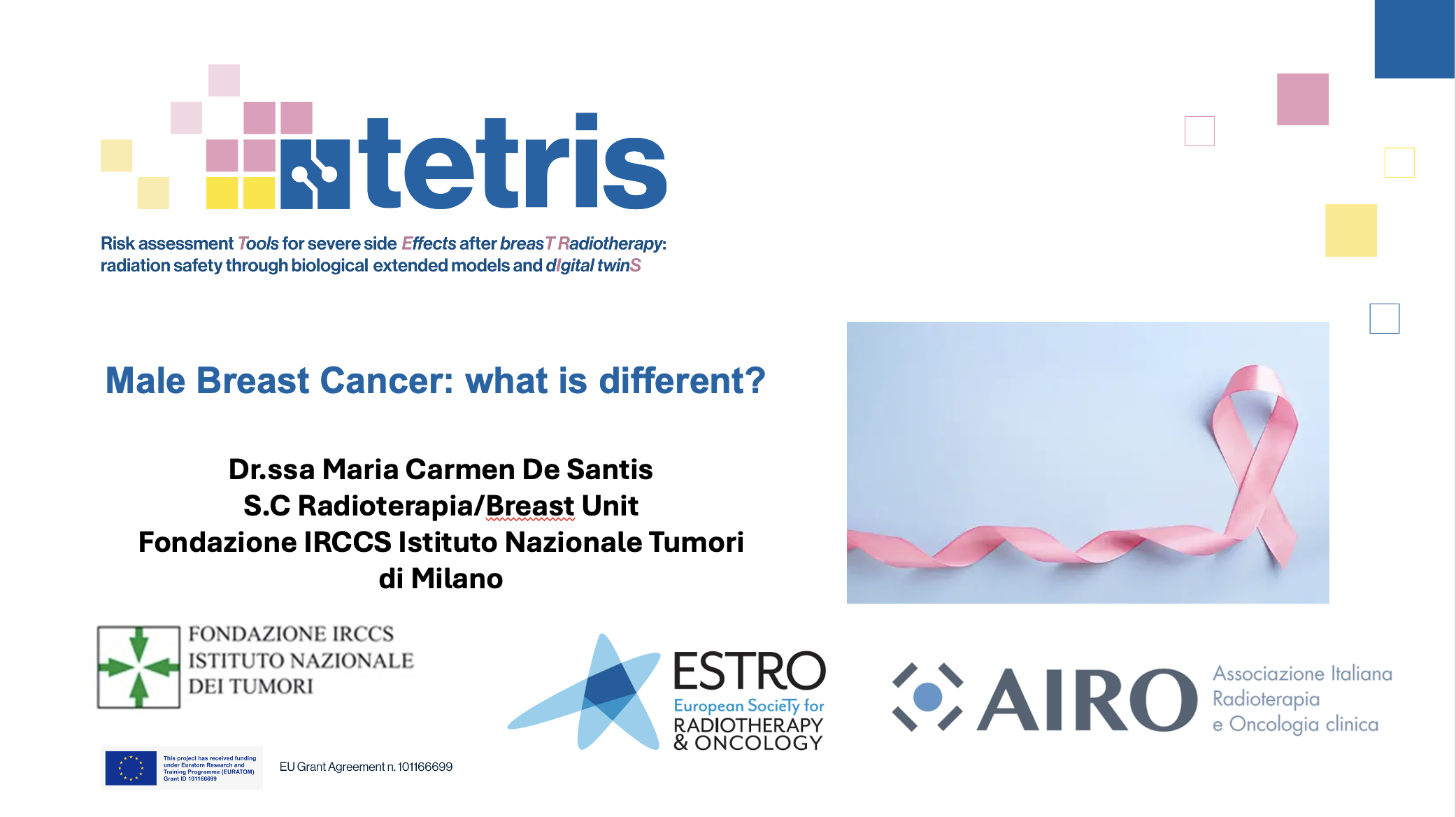
On 9 October 2026, TETRIS hosted the sixth online event of its Educational Webinar Series, broadcast live from the Karolinska University Hospital in Stockholm during the 3rd TETRIS General Assembly.
The webinar, entitled “Male Breast Cancer: What Is Different?”, was delivered by Dr. Maria Carmen De Santis, Radiation Oncologist at Fondazione IRCCS Istituto Nazionale dei Tumori Milano. The session brought together researchers, clinicians and stakeholders to discuss the specific characteristics of male breast cancer, a rare disease that remains significantly underrepresented in clinical research.
Understanding a Rare Disease
Male breast cancer accounts for approximately 1% of all breast cancer cases, and despite an increasing incidence over recent decades, it remains a rare condition. As highlighted during the webinar, much of the current clinical knowledge and many treatment recommendations are still derived from studies conducted in female populations, due to the limited availability of male-specific clinical trials.
Carmen De Santis emphasised that although male and female breast cancers share many similarities, there are important anatomical, biological and genetic differences that should be considered when determining diagnostic and therapeutic strategies.
Biological and Genetic Characteristics
One of the key topics discussed was the biological profile of male breast cancer. The vast majority of cases are hormone receptor-positive, while triple-negative disease is extremely rare. The webinar also explored the role of inherited genetic alterations, particularly BRCA2 mutations, which are more common in men with breast cancer and are associated with a more aggressive disease profile.
Given the strong genetic component of the disease, Carmen De Santis highlighted the importance of offering genetic counselling and testing to all male breast cancer patients. This approach can help identify inherited cancer predisposition syndromes and inform both patient management and family risk assessment.
Diagnosis and Multidisciplinary Management
The webinar reviewed current recommendations for diagnosis and staging, noting that men are often diagnosed at an older age and may present with more advanced disease than women. Imaging techniques such as mammography, tomosynthesis and ultrasound remain essential tools, while multidisciplinary evaluation is crucial due to the frequent presence of comorbidities in this patient population.
The importance of collaboration between specialists was a recurring theme throughout the session, reflecting the need to tailor treatment to each individual patient while managing the challenges posed by limited clinical evidence.
Current Approaches to Treatment
Carmen De Santis presented an overview of treatment strategies for both early-stage and metastatic disease. Surgery remains the primary treatment for localised disease, with mastectomy being the most common surgical approach. Systemic therapies are generally aligned with those used in female breast cancer, although evidence in male patients is often extrapolated from studies involving women.
Given that nearly all male breast cancers are hormone receptor-positive, endocrine therapy represents the cornerstone of treatment, with tamoxifen remaining the preferred option in most cases. The session also discussed the potential role of newer therapeutic approaches, including CDK4/6 inhibitors and PARP inhibitors, while acknowledging the limited male-specific data currently available.
The Role of Radiotherapy
A significant part of the webinar focused on radiotherapy and its contribution to local and regional disease control. In this context, findings were presented from recent retrospective studies and systematic reviews investigating the impact of radiotherapy in male breast cancer patients. While evidence remains limited, the available data suggest that radiotherapy can provide meaningful benefits, particularly in patients with more advanced disease.
The discussion also addressed treatment-related side effects, heart and lung dose considerations, and the need for further research to better understand long-term outcomes in male patients. During the Q&As session, participants explored the challenges of generating robust evidence for rare diseases and highlighted the value of international collaboration to improve future research efforts.
Addressing Evidence Gaps Through Research
One of the main messages emerging from the webinar was the urgent need for greater inclusion of men in breast cancer research. Because most treatment recommendations are currently based on evidence gathered from female populations, there is a continued need for dedicated studies and international collaborations capable of generating stronger, male-specific evidence.
For projects such as TETRIS, improving understanding of under-researched diseases and promoting knowledge exchange between clinicians, researchers and stakeholders is essential to support more personalised and evidence-based healthcare approaches.
The webinar offered participants a comprehensive overview of the current state of knowledge on male breast cancer, highlighting both recent advances and the challenges that remain in achieving truly tailored care for this rare disease.
To watch the full webinar on YouTube channel, click here.
To have a look at the presentation slides, click here.
Stay tuned for upcoming events in the TETRIS Educational Webinar Series as the project continues to promote knowledge exchange and innovation across the cancer research and healthcare communities.