Beyond radiotherapy: using existing data to personalise follow-up
At its third General Assembly in Stockholm, the TETRIS consortium explored how data collected during breast cancer radiotherapy could help identify individual risks and guide post-treatment care.
Radiotherapy ends, but its effects can emerge years later. The risk of long-term complications varies by patient, yet follow-up does not always reflect those differences.
TETRIS is working to bridge this gap. Its models are not intended to change radiotherapy, but to estimate individual risks after treatment and help clinicians decide who to monitor more closely during follow-up.
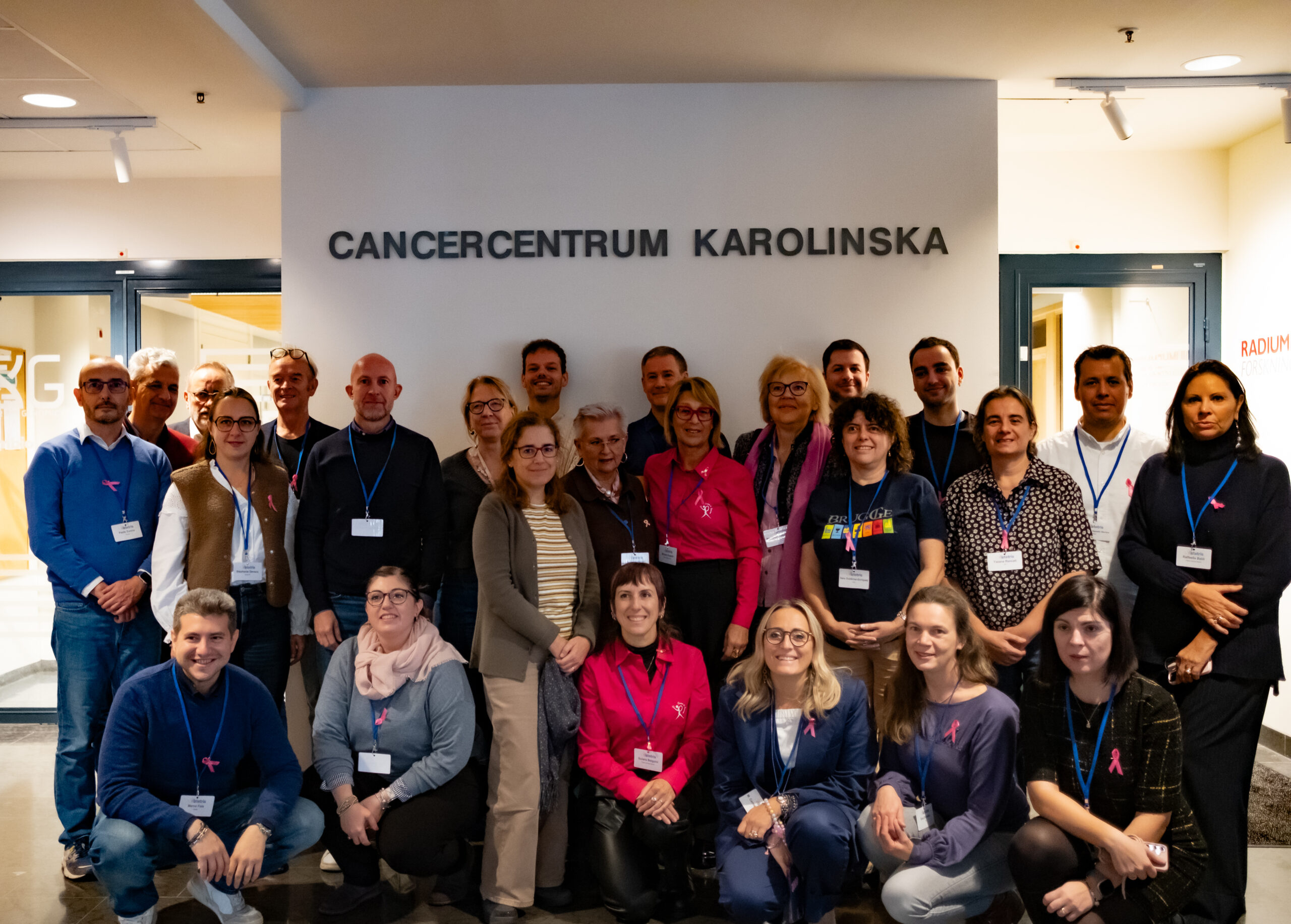
On 8–9 October 2026, the project’s eight partners met at the Karolinska Comprehensive Cancer Centre in Stockholm for the third TETRIS General Assembly. Hosted by Region Stockholm Karolinska University Hospital, the meeting brought together researchers, clinicians, Scientific Advisory Board members and patient representatives.
Looking again at data we already collect
Personalisation doesn’t necessarily start with new tests or more complex data.
Every radiotherapy plan contains detailed information on the doses organs and tissues receive. Every patient also undergoes a planning CT scan. These data are routinely available, require no additional procedures, and may contain information about the risk of late effects.
For TETRIS, this is the starting point. Predictive models are being used to investigate how clinical information, dose distributions and CT images can be combined to build a more individual picture of risk.
The first day of the meeting focused on long-term side-effect modelling, imaging, genetics and transcriptomics. Genetics and gene-expression data may help explain why patients with apparently similar treatments experience different outcomes. But they come after the essential question: how much can we already learn from information available for every patient?
Additional biological data will be valuable only if they meaningfully improve prediction.
Digital Twins: exploring their potential
The second day turned to software development, cellular sensitivity, prospective data collection and Digital Twins.
Within TETRIS, Digital Twins are not the final objective. They are one possibility being explored to see whether different sources of information can be brought together, updated over time, and translated into more personalised risk estimates.
Their usefulness cannot be assumed. The key question is whether they can link predictions to practical follow-up decisions: which complications deserve closer attention, what to monitor, and whether surveillance should change as new information becomes available.
What do patients expect from prediction?
Risk models produce probabilities. Patients need to know what those probabilities mean for their care.
This is why patient involvement remained a visible part of the Stockholm meeting. On 7 October, consortium members and Patient Advisory Board representatives visited Bröstcancerföreningen Amazona Stockholm, one of the patient associations involved in TETRIS.
During the General Assembly, patient representatives joined discussions on communication and dissemination. The consortium also presented a survey on digital health perspectives, co-designed to explore patients’ expectations and concerns about imaging biomarkers, Digital Twins and other emerging technologies. The goal is not simply to ask patients whether they support digital innovation, but to understand what information they consider useful, how individual risks should be communicated and which concerns research needs to address.
AI, clinical relevance and overlooked patients
The programme also connected TETRIS with the wider European research landscape. Professor Christopher Talbot from the University of Leicester presented PRE-ACT, which studies explainable AI for predicting radiotherapy side effects, and ABIGAIL, which focuses on generative AI for breast cancer diagnosis and treatment decision support.
The presentations raised a broader issue for medical AI: technical sophistication alone is not enough. A model must produce information that is reliable, understandable and connected to a meaningful clinical action.
The second day also featured the sixth TETRIS Educational Webinar, “Male Breast Cancer: What Is Different?”, delivered by Dr Maria Carmen De Santis from Fondazione IRCCS Istituto Nazionale dei Tumori Milano and broadcast live from Stockholm. The session drew attention to the specific characteristics of male breast cancer and to a patient population that remains less visible in research and public discussion.
From prediction to action
The Stockholm meeting showed that TETRIS is not pursuing complexity for its own sake.
The project begins with information already available after radiotherapy: clinical data, doses to relevant organs and planning CT images. Genetics and transcriptomics may refine that picture. Digital Twins may help bring different layers together and update them over time. But each additional element must show it improves risk assessment or makes it more useful in practice.
The real challenge is not simply to predict which patients may develop long-term side effects. It is to turn that prediction into better follow-up: knowing who to monitor, what to monitor, where to focus attention, and when action may be needed.
Sometimes personalisation begins not by collecting more data, but by learning to see what is already there more clearly.
A meeting to learn, connect and move forward
Beyond the scientific presentations, the General Assembly offered an opportunity to learn from different disciplines, experiences, and perspectives, including the Scientific Advisors’ wise, independent view. Researchers, clinicians, technology experts and patient representatives exchanged ideas, challenged assumptions and strengthened the connections needed to move TETRIS forward.
With special thanks to those who made it possible
A special thank you goes to the Karolinska University Hospital team for their warm hospitality and organisation, to our Scientific Advisory Board members, Professor Alfons Hoekstra and Professor Carolyn Taylor, for their valuable contributions and insights, and to the Patient Advisory Board representatives, Bröstcancerföreningen Amazona Stockholm, Cuore di Donna Italy and the other patients and ex-patients members attenting in person or online, for their continued engagement and support.