
Home → Project In Brief → The Project
Breast cancer (Bca) is the most commonly diagnosed cancer in women in Europe; with 355,457 new cases in 2020 in the EU-27 countries (56% in the 45-69 age period), BCa accounted for 13.3% of all new cancer cases diagnosed. There is a 1 in 7 chance that a woman in the EU-27 will develop BCa in her life.
Despite being the leading cause of cancer death in women, BCa mortality rates have been declining in recent years due to earlier detection from increased screening and overall improvement in the quality of cancer care.
Randomised trials thoroughly established the role of radiotherapy (RT) following breast conservative surgery, and metanalysis showed improved local control and reduced cancer-related death by about a sixth.
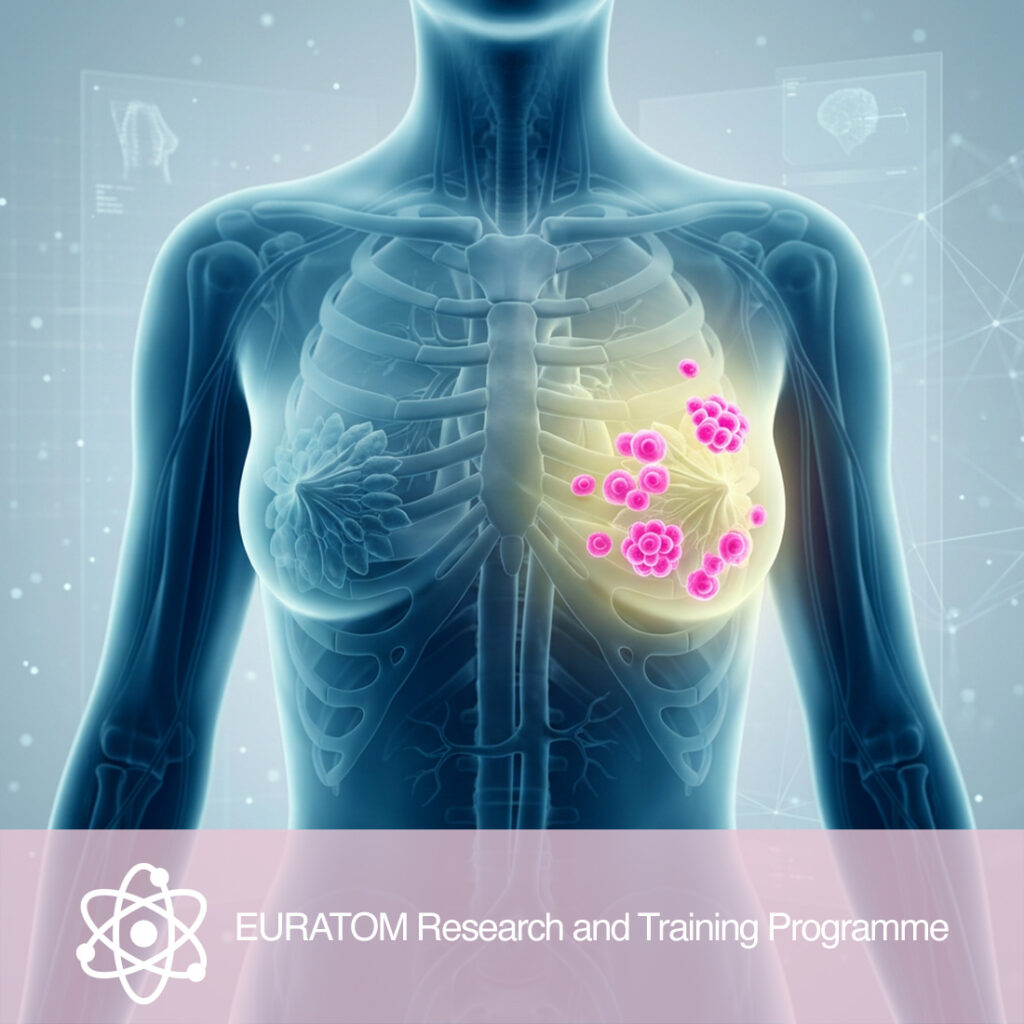
TETRIS objectives are pertinent to the EURATOM Research and Training Programme topics for 2023-2025 as they boost the role of researching the non-power application of ionising radiation in health and medical sectors by unlocking cutting-edge technologies (big data, artificial intelligence) to enhance the effectiveness of radioprotection after RT. TETRIS actions bring innovation to radiation protection via cross-fertilisation among different scientific and technical sectors, including physics, medicine, biology, genetics, data science, mathematical and software engineering and informatics. TETRIS proposes well-directed innovation for adequate risk assessment and management, bringing personalisation into radioprotection
Objective 1
Design and test quantitative personalised risk scores for severe side effects after BCa RT based on dose-response relationships and patients specific risk factors already published in the literature
Objective 2
Develop a CE-marked tool to automatically compute and record the risk scores from the RT treatment data and single patient features.
Objective 3
Prototype digital twins in RT.