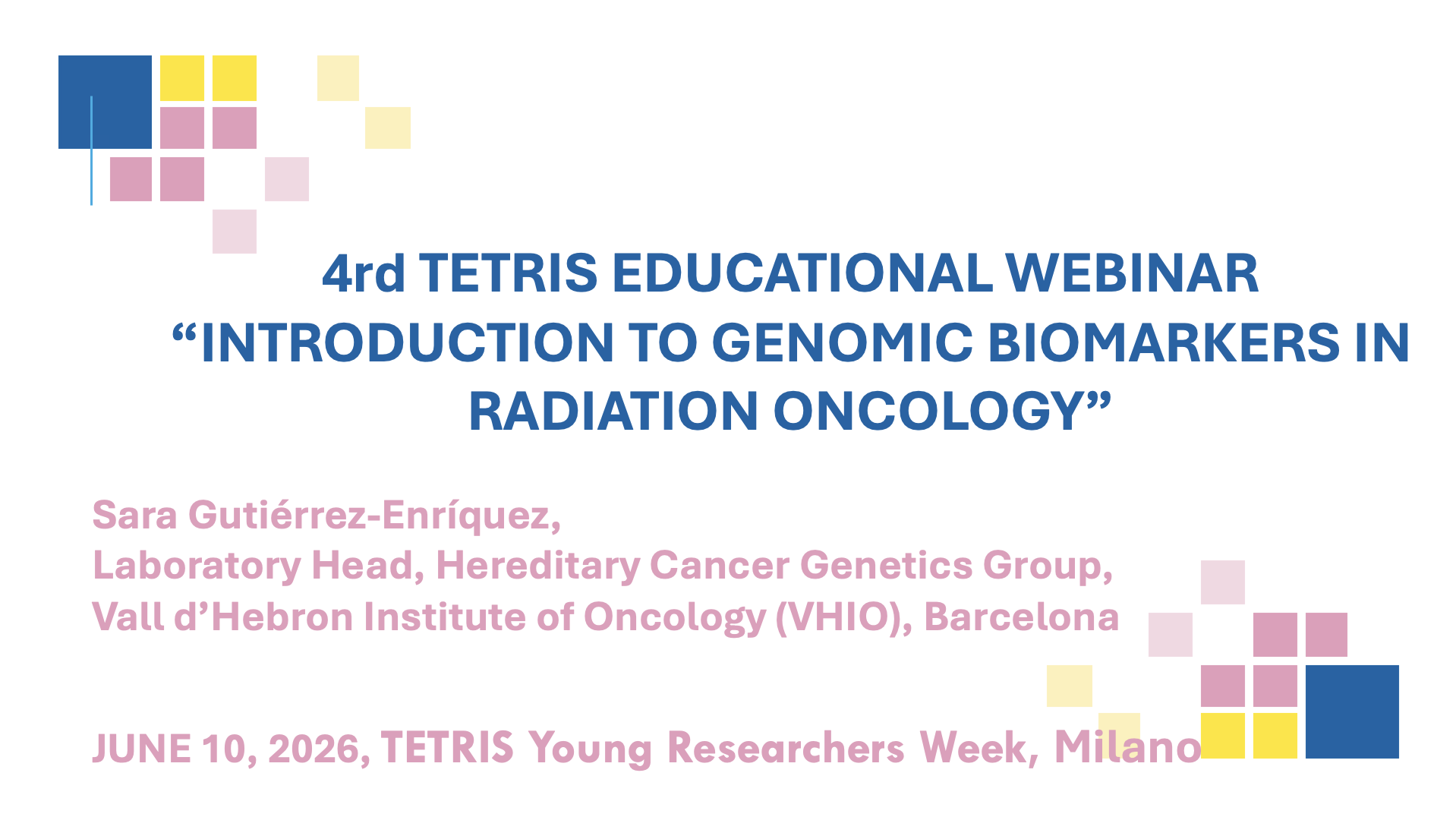
The fourth webinar of the TETRIS Educational Webinar series, titled “Introduction to Genomic Biomarkers in Radiation Oncology”, took place on 10 June, as part of the first TETRIS Young Researchers Week in Milan.
The webinar was delivered by Sara Gutiérrez-Enríquez, Laboratory Head of the Hereditary Cancer Genetics Group at Vall d’Hebron Institute of Oncology (VHIO), Barcelona, Spain, and moderated by Tiziana Rancati, from the Fondazione IRCCS Istituto Nazionale dei Tumori di Milano, Principal Investigator of the project.
The session provided a comprehensive introduction to the role of genomic variation in predicting radiotherapy-induced side effects, and presented the ongoing work of TETRIS Work Package 4 (WP4) on genomic markers.
Starting from the clinical context, Sara Gutiérrez-Enríquez highlighted that approximately 50% of cancer patients receive some form of radiotherapy, which can lead to a range of late side effects, including fibrosis and telangiectasia in the skin, cardiac complications, and secondary malignancies. The central hypothesis underpinning this research area is that germline genetic variation modulates the appearance of complications in normal tissue following radiotherapy. Multiple factors influence this response, including genetics, radiotherapy dose, tumour stage, age, comorbidities, and concurrent treatments.
Sara Gutiérrez-Enríquez then introduced key genomic concepts and explained the difference between single-nucleotide variants (SNVs), differences at a single position in the genome, and single-nucleotide polymorphisms (SNPs), which are SNVs present in at least 1% of the human population. These genomic differences might affect biological pathways involved in DNA repair, inflammation, and tissue response to radiation, making them promising candidates for predictive biomarkers.
The core of the webinar focused on Genome-Wide Association Studies (GWAS) to identify genetic variants associated with radiotherapy outcomes. Participants learned how GWAS analyses allow researchers to investigate associations between thousands of genetic markers and clinical phenotypes, helping to uncover genetic factors linked to treatment response and side effects. Several published GWAS studies on adverse radiation effects were highlighted, including work on breast induration, head and neck mucositis, and fatigue after prostate cancer radiotherapy.
Building on this, the webinar explored the concept of Polygenic Risk Scores (PRS), which combine the effects of multiple genetic variants into a single measure of individual risk. Sara Gutiérrez-Enríquez explained how PRS may improve risk prediction for complex traits and diseases, and how similar approaches could be applied to better understand and predict radiotherapy-related side effects in cancer patients.
The final part of the session focused on the objectives and current progress of TETRIS WP4 (Genetics). The team at VHIO, led by Sara Gutiérrez-Enríquez and including bioinformatician Antón Vega Méndez and research assistant Carmen Moreno Aldomà, aims to identify and validate 21 genetic traits that may predispose patients to late radiotherapy complications, spanning pulmonary conditions (asthma, COPD, idiopathic pulmonary fibrosis, pneumonitis), cardiac diseases (heart failure, atrial fibrillation, coronary artery disease, and others), and secondary cancers (breast, lung, thyroid, melanoma, and more). By integrating genomic information with clinical, imaging, and biological data, TETRIS seeks to improve patient stratification and ultimately optimise treatment decisions.
The webinar concluded highlighting the growing importance of genomic biomarkers in radiation oncology and their potential to support more personalised and safer radiotherapy. While further validation is still needed before genomic predictors can be routinely implemented in clinical practice, advances in genomics, GWAS analyses, and polygenic risk modelling are opening new opportunities for precision medicine in cancer care.
The webinar has been recorded and is available here on TETRIS YouTube channel while Sara Gutiérrez-Enríquez’ presentation is available here.
Further webinars in the TETRIS Educational Webinar series will be announced soon. Follow our channels to keep up to date with upcoming events and the latest developments from the project.